Tag: USGS
-

Dragonflies Reveal Surprising Insights into Mercury Pollution
Public Participants Make Monitoring Possible in Uncharted Locations Sources/Usage: Public Domain. View Media DetailsThe map above shows sites where dragonfly larvae were collected for the Janssen et al. 2024 paper. Dragonfly larvae were collected at three types of sites including wetlands, lotic systems (flowing water like streams or rivers), and lentic systems (still waters like lakes…
-
Opinion: Our water is polluted with ‘forever chemicals.’ Here’s how some agencies are stepping in.
In this June 7, 2018, file photo, PFAS, or perfluoroalkyl and polyfluoroalkyl substances, foam gathers at the the Van Etten Creek dam in Oscoda Township, Mich., near Wurtsmith Air Force Base. These man-made chemicals have been used in industry and consumer products for decades and today can be found in nearly half of the tap…
-

America uses 322 billion gallons of water each day. Here’s where it goes.
Photo © iStockphoto.com/iofoto From cooling power plants to quenching thirst and growing crops, water is part of everything we do. February 22, 2019 — As climate change, urban development, irrigation and other factors are altering the availability of water, it’s important to understand how we use water on a daily basis in the U.S. —…
-

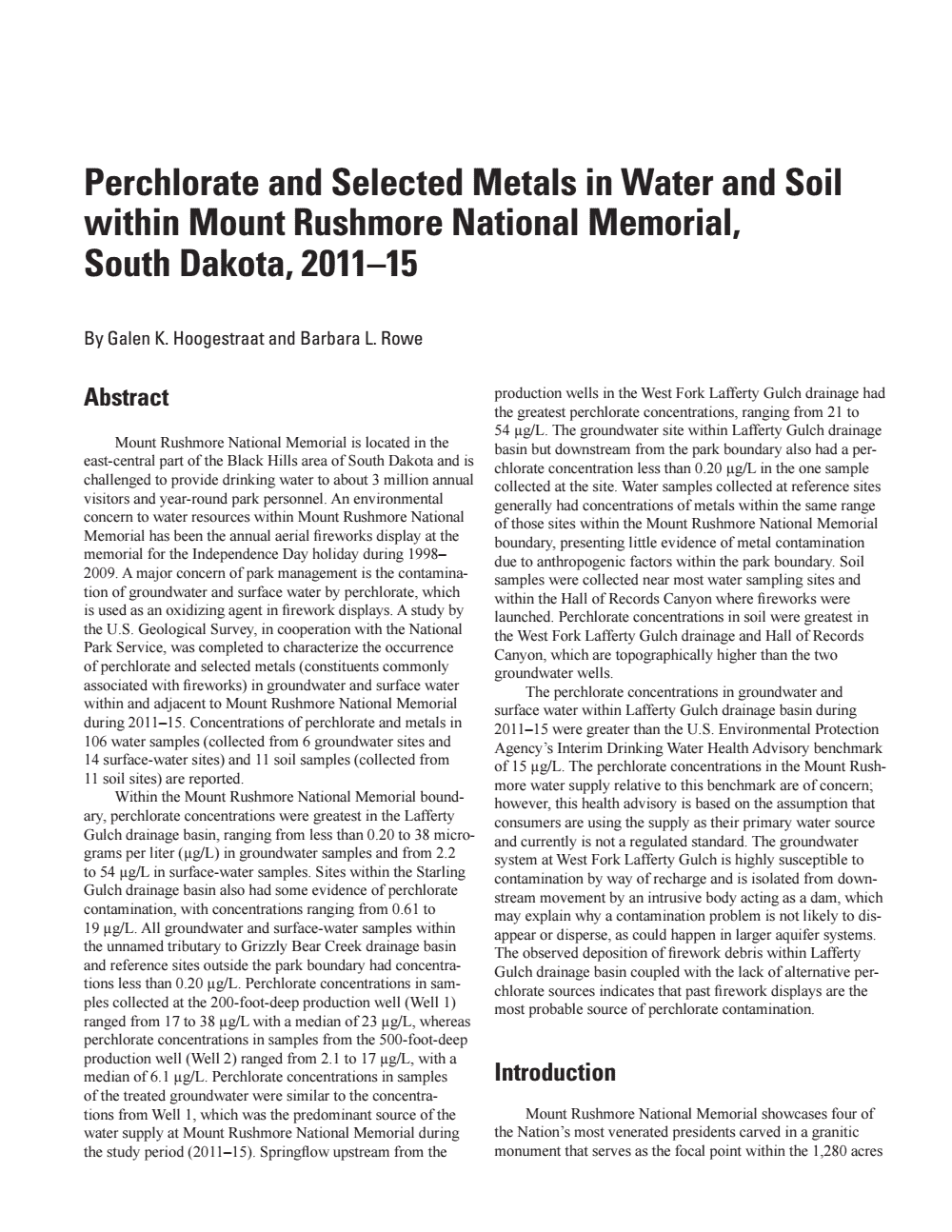
Fireworks at Mt. Rushmore contaminated water supply
The news came out nationally in the form of a presidential tweet. President Trump praised Governor Kristi Noem for bringing "the big fireworks" back to Mount Rushmore for an Independence Day celebration in 2020. May 8, 2019 The elaborate fireworks displays took place for 12 years, but the practice was stopped in 2009 due to…
-

Is Our Water Supply Disrupting the Human Endocrine System?
Credit: Pixabay. Exposure to emerging contaminants, even at extremely low doses, can cause adverse health effects for humans, including endocrine disruption which can lead to developmental malformations, interference with reproduction, increased cancer risk and disturbances in the immune and nervous system functions. These emerging contaminants include pharmaceuticals and personal care products, hormones, perfluorinated alkyls and…