Photo: Sausal Creek overflowing its banks during a rainstrom in 2022. Credit: Daniel Danzig
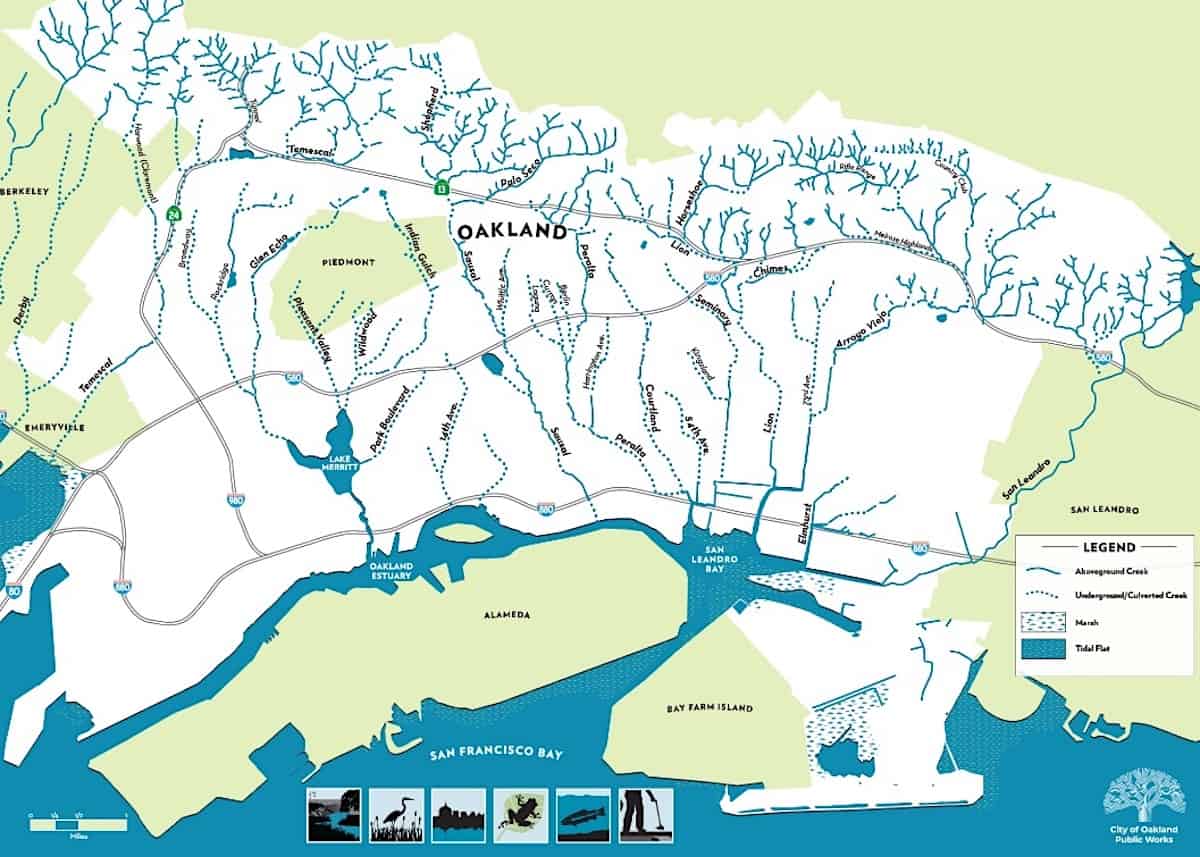
It’s hard to tell now, but Oakland used to be flush with creeks. Glimmering streams running down rolling hills to meet the crisp waters of the San Francisco Bay flourished during the East Bay’s not-too-distant past. On the land that became Oakland, around 15 major creeks emptied into the Bay, and over 30 smaller tributaries fed these streams from the hills.
Filled with native fish, thriving plant life, and rich soils, the creeks of the East Bay defined the area’s ecological and hydrogeological history. For as long as humans have inhabited the Bay Area, creeks have been a vital life source, providing drinking water and food.
However, over 150 years of urban sprawl and industry have altered their natural flow, degraded their water quality, and reshaped the paths these creeks take. Many of Oakland’s streams were buried underground or channelized into rigid, straight paths unfit for native plants and creatures. In other areas, creeks were impacted by mining, logging, agriculture, and pollution.
Community groups, environmentalists, and government officials are working together today to try and revitalize some of these streams, but they are up against years of degradation and barriers—both physical and bureaucratic.
To better understand the condition Oakland’s creeks are in today—and their potential as natural and community resources—The Oaklandside is spending time talking with creek stewards, researchers, neighbors, environmental groups, and government officials who all have a stake in these local waterways. This new series will dive deep into the health of Oakland’s creeks, the communities that live around them, and the people who look after them. While many of the city’s streams share similar challenges, they each have their own unique problems and potentials. And while they now exist in various states of health, they were once all part of the same rich ecosystem.
The East Bay was shaped by its watersheds—literally. Rainfall flowed down the hills cutting deep ravines before spilling onto the flatlands where channels meandered into the bay. The entire way, water carved the mountains and plains, and built the marshes where land and Bay overlapped.
The Ohlone people—the indigenous inhabitants of Oakland and much of the Bay Area, were cultivators of the East Bay’s watersheds, long before settlers came and dammed, diverted, and culverted the creeks. And unlike the settlers who would later claim the land that became Oakland, the Ohlone’s impact wasn’t harmful to biodiversity and human health.
“The [Ohlones] pruned shrubs in a way that encouraged the growth of branches (for use of baskets), and the weeded of the plants that competed with those they needed for food. They set fires to improve access to certain areas to attract and improve forage for wildlife (which they then hunted), and to prevent chaparral from […]
Full article: oaklandside.org
https://www.youtube.com/watch?v=0Xqa0B9r7Y8 Iowa water: Pulitzer Prize winner Art Cullen and award-winning cinematographer Jerry Risius have teamed…
Clean water is essential for life, yet millions of Americans unknowingly consume contaminants through their…
Human brains contain higher concentrations of microplastics than other organs, according to a new study, and the…
From the Office of the Governor: In anticipation of a multi-day, significant atmospheric river in Northern California,…
From Governor Newsom: Scientists, water managers, state leaders, and experts throughout the state are calling…
Photo: A harmful algal bloom in Milford Lake, Kansas, made the water appear bright green.…